Dermatologists, aesthetic practitioners, and skin care specialists share a common frustration: the more patients they see, the more time they spend documenting — and the less time they have left for actual clinical work. AI clinical documentation is rewriting that reality. By automating the capture, structuring, and storage of patient encounter data, AI clinical documentation technology is giving skin care professionals back the hours they need to grow their practice and deepen patient relationships.
This guide walks through every dimension of AI clinical documentation as it applies to dermatology and aesthetic medicine — from the specific dictation challenges practitioners face, to the compliance safeguards that protect patient data, to how purpose-built platforms like Nexomatic.ai are leading the transformation of high-volume skin clinics.
The Challenge of Dictation in Dermatology Documentation
Dermatology is one of the most documentation-intensive specialties in medicine. A single full-body skin check generates a catalog of observations: lesion location, morphology, size, color variation, border characteristics, and differential diagnoses — all of which must be captured precisely for medico-legal protection and continuity of care.
Traditional dictation workflows are poorly suited to this level of granularity. A physician speaking into a handheld recorder or basic voice-to-text tool must mentally shift between examining the patient and narrating findings in a format that downstream transcriptionists or EHR templates can interpret. The cognitive load is significant. Errors accumulate. Notes get deferred until after clinic hours, degrading both accuracy and physician wellbeing.
The specific vocabulary of dermatology compounds the problem. Terms like lichenification, telangiectasia, actinic keratosis, and seborrheic dermatitis are routinely misinterpreted by general-purpose transcription software. A generic AI clinical documentation assistant that has not been trained on dermatology-specific corpora will produce drafts that require extensive manual correction — defeating the purpose of automation entirely.
There is also the procedural dimension. Dermatology practices frequently combine diagnostic visits with in-office procedures: biopsies, cryotherapy, excisions, phototherapy, and cosmetic injectables. Each procedure type has its own documentation requirements, consent considerations, and billing codes. An AI clinical documentation solution that cannot accommodate this procedural complexity is not truly fit for purpose in a dermatology setting.
The right AI clinical documentation software doesn’t just transcribe — it understands the clinical context of dermatology, formats notes to specialty standards, and integrates seamlessly with the tools practitioners already use.
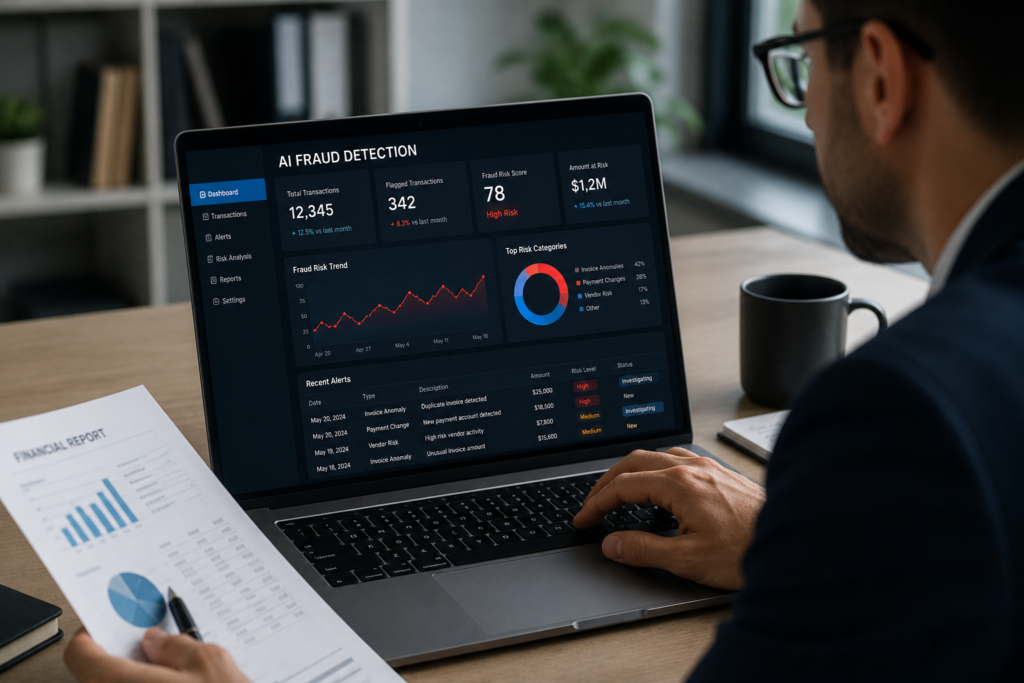
Practices that have moved beyond generic tools to specialty-aware AI clinical documentation report dramatic reductions in after-hours charting, fewer rejected claims due to incomplete documentation, and measurably higher staff satisfaction — all metrics that compound positively over time.
Why This Technology Is the Safest Choice for Specialists
Safety in the context of AI clinical documentation encompasses two distinct but equally important dimensions: patient data security and clinical accuracy. Skin care professionals considering adoption must be confident on both fronts.
Data Security and Regulatory Compliance
Any AI clinical documentation assistant that processes patient information must comply with HIPAA in the United States, as well as equivalent frameworks in other jurisdictions. Compliance requirements for dermatology practices include:
- Signed Business Associate Agreements (BAAs) with the AI clinical documentation vendor before any PHI is transmitted.
- End-to-end encryption for audio capture, transcript storage, and note delivery — AES-256 at rest, TLS 1.2 or higher in transit.
- Role-based access controls ensuring only authorized clinical staff can view or edit transcribed notes.
- Full audit logging of access events, note modifications, and data export actions.
- Configurable data retention and deletion policies aligned with state and federal requirements.
Dermatology practices that perform cosmetic procedures also hold sensitive photographic records alongside clinical notes. A well-designed AI clinical documentation platform integrates with clinical photography systems and ensures that images, annotations, and procedure notes are stored under the same compliance framework as the encounter documentation itself.
Clinical Accuracy and Safety Guardrails
The clinical safety argument for AI clinical documentation rests on a paradox: the technology is safer than manual documentation precisely because it removes the human error introduced by fatigued, time-pressured documentation. When a physician is rushing to complete notes at 8 PM, the risk of a missed finding, a transposed medication dose, or an incomplete allergy record is significantly higher than when an AI clinical documentation assistant captures the encounter in real time and presents a complete draft for focused physician review.
Leading AI clinical documentation software incorporates additional safety layers: mandatory physician review and sign-off before notes are finalized, flagging of clinically inconsistent entries, and integration with clinical decision support tools that cross-reference the generated note against known protocols. These guardrails transform AI clinical documentation from a simple transcription service into an active quality-assurance mechanism.
Nexomatic.ai as the Top Solution for High-Volume Clinics
Among the growing field of AI clinical documentation companies, Nexomatic.ai has distinguished itself as a purpose-built solution for practices that cannot afford documentation bottlenecks. Designed with the operational realities of high-volume skin care clinics in mind, the platform addresses the core pain points that generic AI scribes and transcription services leave unresolved.
For dermatology and aesthetic practices that see dozens of patients per day across multiple providers, the documentation workflow must be fast, accurate, and frictionless. Nexomatic.ai delivers on each dimension:
- Specialty-trained language models that recognize dermatology-specific terminology without requiring manual correction of common transcription errors.
- Real-time ambient capture that records the clinical encounter naturally — no disruption to the patient-provider interaction, no separate dictation step.
- Automatic note structuring aligned with dermatology documentation standards: chief complaint, skin examination findings, assessment, plan, and procedure notes generated from a single encounter recording.
- Direct EHR integration that pushes completed, physician-approved notes to the patient chart without manual copy-paste workflows.
- Scalable multi-provider architecture supporting group practices, multi-location dermatology groups, and MedSpa networks operating under a single organizational umbrella.
Strengthen Your Workflow for Long-Term Success
Adopting AI clinical documentation is not a one-time technology decision — it is a workflow transformation that compounds in value the more systematically it is implemented. Skin care practices that extract the most from their AI clinical documentation software treat the adoption as a strategic initiative, not a plug-in-and-forget tool.
Phase 1: Baseline and Goal Setting
Before going live with AI clinical documentation, successful practices document their current state: average note completion time, number of after-hours charting hours per provider per week, claim denial rates attributable to documentation deficiencies, and physician-reported satisfaction with documentation workflows.
Phase 2: Structured Onboarding
Even the most intuitive AI clinical documentation assistant requires a calibration period. Providers should expect two to four weeks of regular use before the system’s accuracy for their specific vocabulary and speaking patterns reaches peak performance.
Phase 3: Workflow Integration
The full value of AI clinical documentation emerges when it is embedded into the end-to-end practice workflow rather than treated as a standalone tool. That means connecting the AI clinical documentation software to the EHR, the clinical photography system, the billing platform, and the patient communication tools.
Phase 4: Continuous Improvement
AI clinical documentation platforms improve continuously through model updates, specialty corpus expansion, and provider-specific learning. Practices should schedule quarterly reviews of note quality metrics, error rates, and physician satisfaction.
How Dermatology AI Scribes Capture Data in Real Time
Ambient Audio Capture
Modern AI clinical documentation systems use microphones embedded in smartphones, tablets, or dedicated clinical devices to capture the audio of the encounter. Unlike traditional dictation, the provider does not need to narrate findings into the device — the system listens to the natural conversation between the clinician and the patient.
Speaker Diarization
The AI clinical documentation engine identifies and separates multiple speakers in the audio stream — distinguishing the physician’s clinical observations from the patient’s reported symptoms and history.
Dermatology-Specific NLP
The core intelligence of an AI clinical documentation assistant is its natural language processing layer. In dermatology, that NLP engine must recognize and correctly interpret a dense vocabulary of morphological descriptors, anatomical locations, diagnosis codes, procedural terminology, and medication names.
Structured Note Generation
After the encounter ends, the AI clinical documentation system generates a structured draft note within seconds. For dermatology, that typically means a formatted skin examination section documenting each finding by location and morphology, a differential diagnosis list, an assessment and plan, and procedure notes.
Frequently Asked Questions
Can AI reduce administrative burden?
Yes — and in dermatology, the impact is particularly significant. AI clinical documentation eliminates the most time-consuming administrative task in any clinical practice: after-hours chart completion. By capturing and structuring the encounter in real time, AI clinical documentation software reduces note completion from an average of five to ten minutes per patient to a focused thirty-second review.
Are AI-generated skin notes accurate?
Accuracy depends on the quality of the AI clinical documentation platform and the degree to which it has been trained on dermatology-specific language. Leading AI clinical documentation software achieves word error rates below 5% for clear clinical speech in controlled environments.
What are the limitations of AI in dermatology documentation?
Current AI clinical documentation technology has several limitations. First, visual findings — the morphology a physician sees but does not verbalize — are not captured by audio-based systems. Second, models can struggle with heavily accented speech or very fast dictation. Finally, AI is not a substitute for clinical decision-making.
How do I use an AI tool in a skin check exam?
The workflow is straightforward. Before the exam, activate the AI software on your device. As you conduct the examination, narrate your findings naturally (location, morphology, size, color, borders). When the exam is complete, end the session. The system will generate a structured draft note within thirty seconds for your review.
Conclusion
AI clinical documentation is not a future technology for dermatology — it is a present-day competitive advantage. Practices that implement AI clinical documentation today are seeing faster note completion, better billing accuracy, higher physician satisfaction, and stronger patient experience scores. Those that delay are spending those same hours at the keyboard instead of at the bedside.